




How to Choose the Right Quilt Batting: A Complete Guide
Batting is the layer hiding inside every quilt sandwich, and it does more work than people give it credit for. It shapes how a quilt drapes, how warm it is, how the quilting stitches look, and how the whole thing holds up after years of washing. Most batting should not be prewashed, and the right type for your project depends on fiber content, loft, whether it has scrim, and how the finished quilt will be used and cared for.
Don't Prewash Your Batting
Batting is made to be held in place by the quilt top and backing. On its own, washing it can stretch, separate, or pill the fibers, since nothing is holding them flat. The fibers in batting that's been washed before quilting often pull apart and lose their structure.
Most manufacturers recommend quilting straight from the package and waiting until the whole quilt is finished before the first wash. That first wash is also where cotton and cotton-blend battings get their soft, slightly crinkled look, the one that makes a quilt feel a bit like an heirloom from the start.
There's one exception worth knowing about: a few battings, particularly older, recycled, or unbonded cotton products, can sometimes be hand-washed gently if they're dusty or have been sitting in storage a long time, but only if the manufacturer says it's okay. Check the label before you do anything to it. Care instructions vary more between brands than you'd expect.

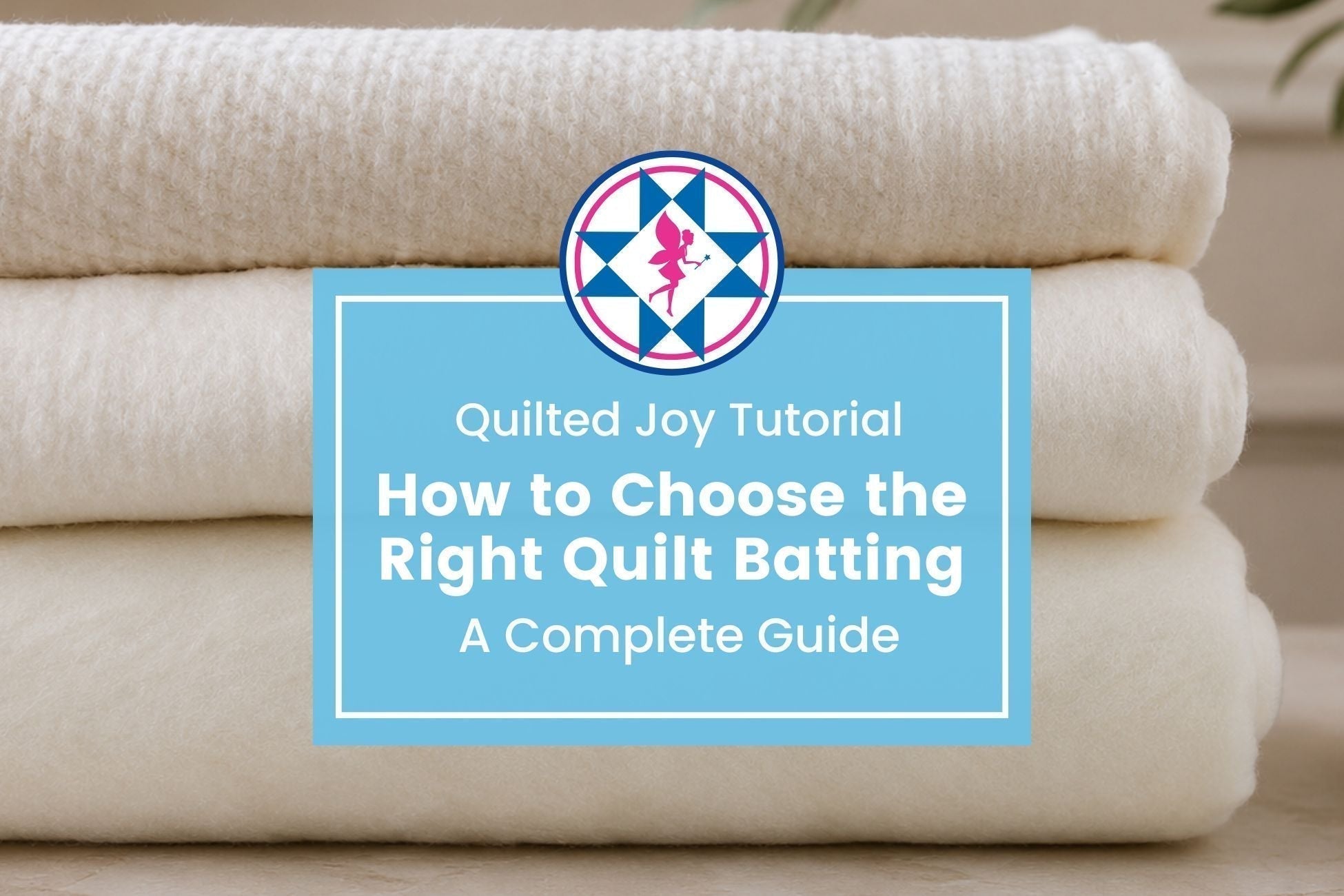
The batting shown in the photo above was washed before being quilted, and you can see how the fibers pulled apart and lost their structure. Most batting manufacturers recommend using batting directly from the package and waiting until the quilt is completely finished before washing it.
Quick answers
| Question | Short answer |
|---|---|
| Should I prewash batting? | No, in almost all cases. Quilt it straight from the package, then wash the finished quilt. |
| Best batting for beginners? | 100% cotton or a cotton blend. It drapes naturally and is forgiving to work with. |
| How much bigger should batting be than my quilt top? | 4 to 8 inches larger on each side. |
| What is "scrim"? | A thin stabilizer layer that holds batting fibers in place and lets you space quilting lines further apart. |
| Does batting color matter? | Yes. Light batting fibers can show through dark fabric (called bearding), so dark or black batting works better for dark quilts. |
Do Choose Batting Based on Your Project
There's no single "best" batting. The right one depends on what the quilt is for. Before you buy, think about how often it'll be washed, whether it's headed for a bed, a wall, or a quilt show, and whether you want a flat, traditional look or extra loft that makes the quilting stitches pop. Whether it'll be quilted by hand, on a domestic machine, or on a longarm matters too.
The "best" batting isn't the same for every quilt. Before making your choice, think about how the finished quilt will be used. Will it be washed often? Displayed at a show? Snuggled under every night? Do you want a flat, traditional look or extra loft that makes your quilting designs stand out?
Whether you like the drape of cotton, the toughness of a cotton blend, or the loft of wool, picking the right batting matters just as much as picking the right fabric.
|
Fiber |
Loft |
Drape |
Best for |
|---|---|---|---|
|
100% cotton |
Low |
Soft, flat drape, maximum crinkles after washing |
Traditional and heirloom quilts, bed quilts. This batting gives you that shabby chic look with maximum shrinkage. |
|
Cotton/poly blend (80/20) |
Low to medium |
Cotton softness with more durability |
Baby quilts, everyday quilts, frequent washing. It has a bit of shrinkage and a lovely drape. It is our favorite batting type. |
|
Wool |
Medium to high |
Light but warm, good stitch definition |
Show quilts, quilts where the quilting design should look sculpted with as much texture as possible. Quilting will really stand out. This batting also needles well so it is popular with hand quilters. |
|
Polyester |
Medium to high |
Lightweight, holds its loft, barely shrinks |
T-shirt quilts, tied quilts, comforters, warmth without bulk |
|
Bamboo or bamboo blend |
Low to medium |
Soft, breathable |
Quilters who want a renewable fiber, or fiber artists who love thread painting (it doesn't shred thread the way polyester can) |
Browse our selection of cotton, wool, and specialty batting to find the perfect match for your next project!
Not Sure Which Batting Is Right for Your Quilt?

Choosing batting doesn't have to be overwhelming. Here are a few of our favorite recommendations:
• For a classic quilt feel: Warm & Natural and Nine Acres White 100% Cotton Mid-Weight Batting offer natural breathability, beautiful drape, and the softly crinkled look many quilters love after washing. Nine Acres White also features premium U.S. cotton fibers, minimal shrinkage, and can be quilted up to 8 inches apart without scrim, glue, or binders.
• For extra loft and stitch definition: Hobbs Tuscany Wool adds beautiful dimension to quilting designs while remaining lightweight, breathable, and soft.
• For lightweight warmth: Wool and polyester battings both provide excellent warmth without excess weight. Wool offers natural temperature regulation, while polyester provides cozy insulation with minimal shrinkage.
• For baby quilts and everyday use: Nine Acres 80/20 Cotton Blend and Hobbs Heirloom Premium 80/20 Cotton/Poly Blend combine the softness of cotton with the added durability of polyester to stand up beautifully to frequent washing, making them excellent choices for quilts that will be used, cuddled, and loved every day.
• For hand quilters: Hobbs Heirloom Cotton is a longtime favorite thanks to its soft hand, beautiful drape, and traditional cotton feel.
Do Consider Loft And Scrim
Loft is just the thickness of the batting. Low-loft batting (around 1/8 inch) gives a flatter look that puts the focus on piecing, and it's easier to hand-quilt. Higher-loft batting (1/4 to 3/8 inch or more) gives quilting motifs more dimension and texture.
Scrim is a thin layer bonded onto some batting to keep the fibers from shifting or pulling apart. Batting with scrim usually allows quilting lines spaced 8 to 12 inches apart. Without scrim, you generally need to quilt closer together, often every 3 to 4 inches, though some manufacturers build in longer fibers that hold up at wider spacing even without scrim.
Do Read the Manufacturer's Recommendations
Every batting behaves a little differently. Shrinkage rates, recommended quilting distances, and whether it's better suited to hand or machine quilting all vary by brand and fiber blend. A few minutes with the manufacturer's instructions can save you from surprises after the first wash.

Do Let Folded Batting Relax
Many battings are packaged folded to save space. When you open the package, you may notice creases or wrinkles. Once you unfold it, let it lie flat for a few hours, or overnight, before you sandwich your quilt.
For stubborn creases pop it into the dryer on the air fluff cycle with a damp washcloth and the wrinkles should ease themselves out.
Do Watch for Bearding
Bearding is what happens when batting fibers work their way through the quilt top or backing fabric. It's more likely with loosely woven fabric, a dull needle, or after a few washes. On dark fabric, bearding shows up as little light-colored specks, which can be frustrating after you've spent hours on a project.
If you're working with mostly dark or black fabric, dark or black batting hides any fiber migration much better, and you'll spend less time lint-rolling your finished quilt. A tightly woven fabric and a fresh, sharp needle help too, no matter what color batting you use.
Don't Forget That Batting Affects Your Quilting Design
The same quilting pattern can look completely different depending on what's underneath it. Low-loft batting flattens things out and lets the piecing take center stage. Higher-loft batting makes the quilting motifs themselves stand out, with more texture and shadow.
So if the piecing is the star of your quilt, go low-loft. If you want people to notice the quilting, reach for something with more loft, like wool or polyester.
Do Use Batting That Is Slightly Bigger Than Your Project
Cut your batting bigger than your finished quilt top, usually 4 to 8 inches larger on each side. That extra margin gives the layers room to shift a little during quilting and gives you (or your longarm quilter) room to load the quilt without pulling the top out of shape.
Precut batting tends to come in these standard sizes:
| Size | Approximate dimensions |
| Crib | 45" x 60" |
| Twin | 72" x 90" |
| Full/ Queen | 90" x 108" |
| King | 120" x 120" |
For bigger projects, you can also buy batting off a roll and cut it to size, or join two pieces together by butting the edges and stitching them by hand or machine, or using batting tape, to make one piece large enough for the quilt.
Do Explore Different Batting Options
Today's quilters have more batting choices than ever before. Cotton, wool, polyester, bamboo, and blended battings each bring something unique to a project.
At Quilted Joy, we've expanded our batting selection to give quilters more options for every style of quilting. Trying a new batting can completely change the look and feel of a finished quilt and may help you discover a new favorite.

Try Something New: Nine Acres Batting
We're excited to carry Nine Acres Batting, a family-owned company dedicated to producing exceptional batting for quilters. Made with premium U.S. fibers, Nine Acres batting is carefully carded, crosslapped, and needle-punched to create smooth, consistent batting that quilts beautifully.
Their 100% Cotton Batting is free from scrim, resins, glue, and binders, offering a soft hand, beautiful drape, breathability, and dependable performance for both hand and longarm quilters. Long, high-quality fibers provide stability that allows quilting up to 8 inches apart while maintaining reliable loft and flexibility for both dense and open quilting designs. The Autumn Mid Weight provides balanced comfort with approximately 3% shrinkage when washed and dried on cool settings.
For added durability, Nine Acres 80/20 Quilt Batting blends 80% U.S. long-staple cotton with 20% fine-denier polyester fibers. This combination offers the softness of cotton with enhanced resilience and shape retention, making it an excellent choice for quilts that will be used and loved for years to come. Like all Nine Acres batting, it is free from scrim, resins, and binders for a smooth, breathable finish.
Whether you prefer 100% cotton or an 80/20 blend, Nine Acres offers thoughtfully crafted batting designed to help every quilt look and feel its very best.
Batting picks by project
| If you want... | Try... | Why |
|---|---|---|
| A classic quilt feel | Warm & Natural, or Nine Acres White 100% Cotton Batting Mid-Weight | Breathable, soft drape, and the lightly crinkled look many quilters love after the first wash. Nine Acres uses long-staple U.S. cotton, shrinks about 3% on a cool wash and dry, and can be quilted up to 8 inches apart with no scrim, glue, or binders. |
| Extra loft and stitch definition | Hobbs Tuscany Wool | Adds dimension to your quilting while staying lightweight and soft, with a loft around 1/4 to 3/8 inch and roughly 3 to 5% shrinkage. |
| Lightweight warmth | Wool or polyester | Wool regulates temperature naturally; polyester adds cozy warmth and barely shrinks. |
| Baby quilts and everyday use | Nine Acres 80/20 Cotton Blend, or Hobbs Heirloom Premium 80/20 Cotton/Poly | Cotton's softness plus polyester's durability, which holds up to frequent washing. |
| Hand quilting | Hobbs Heirloom Cotton | A long-time favorite for its soft hand and traditional drape, both of which make it easier to needle by hand. |
Frequently asked questions
Should you wash batting before quilting?
No. Quilt it straight from the package, then wash the finished quilt. Washing loose batting can stretch, separate, or damage the fibers, since nothing is holding them in place yet.
What batting has the highest loft?
Wool and polyester generally have the highest loft, which makes quilting designs stand out with more dimension and texture than low-loft cotton.
Can you use polyester batting for hand quilting?
You can, but cotton or wool is usually easier to work with for hand quilting because the needle moves through it more smoothly and it has a softer drape. Polyester can resist a hand needle more and is more prone to bearding.
Why is my quilt growing little white fibers through the fabric?
That's bearding, batting fibers migrating through the weave of the fabric. It happens more with loosely woven fabric, a dull needle, or light batting under dark fabric. Tightly woven fabric, a fresh sharp needle, and dark batting for dark quilts all help prevent it.
How much batting do I need for my quilt?
Buy batting that's 4 to 8 inches larger than your finished quilt top on every side. That gives you room for the layers to shift while quilting and lets you square up the edges afterward.
The Bottom Line
Batting may be the part of the quilt nobody sees, but it affects almost everything about how the finished piece looks and feels. Skip the prewash, pick your batting based on how the quilt will be used and quilted, and pay attention to loft, scrim, color, and sizing along the way.
If you're not sure which batting is right for your next quilt, stop by Quilted Joy. Our Quilt Fairies are always happy to help you compare options and find the perfect batting for your next quilting adventure.
I’m Angela- Co-host of the Fons & Porter’s Love of Quilting PBS show. APQS Long arm Dealer and Educator. Triplet Momma. Designer. Thread Bimbo.

Leave a Reply