






Stitch Regulation Explained: Finding Your Quilting Rhythm
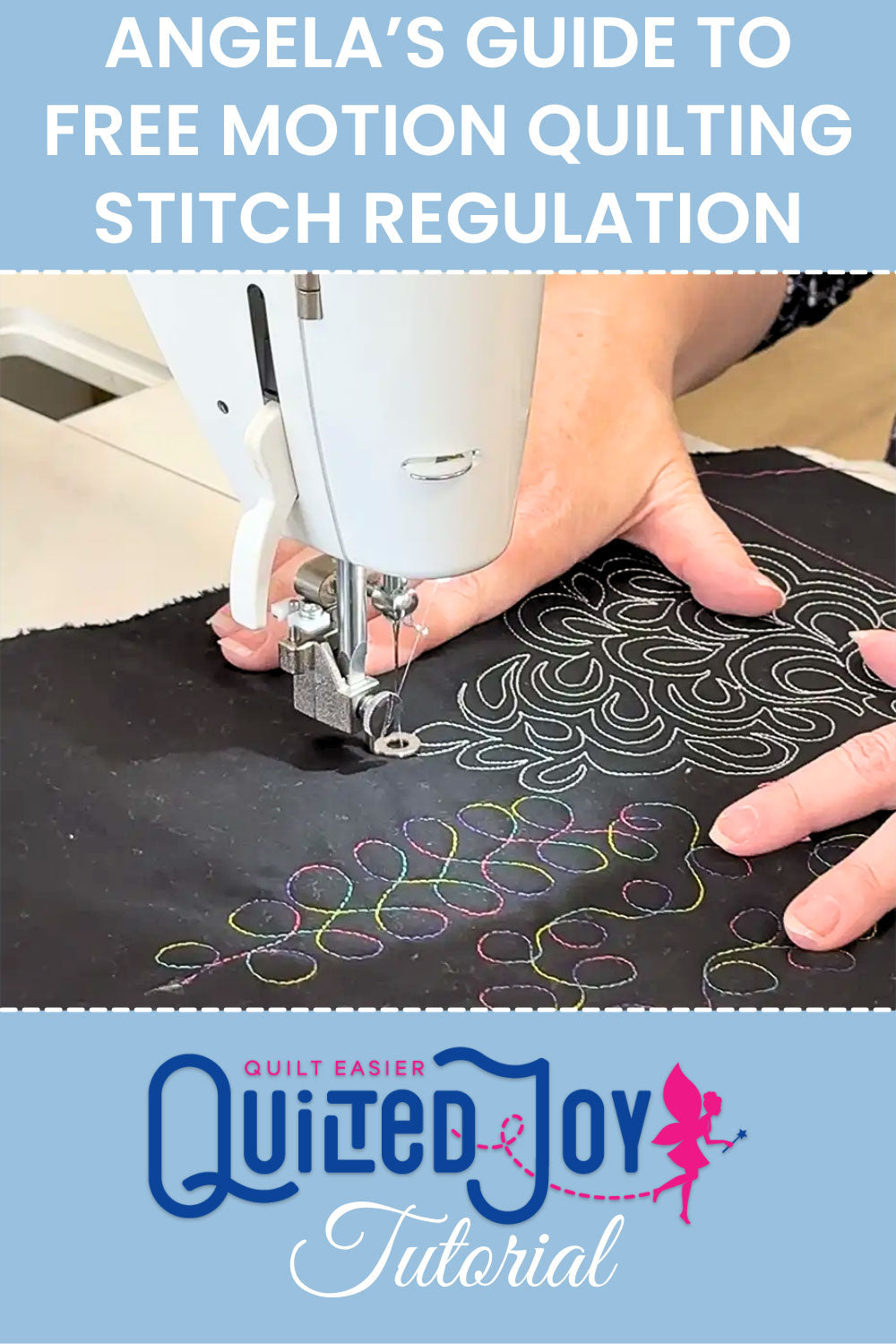
If you have ever struggled with keeping your quilting stitches even, you are not alone. Stitch regulation is one of the most important features in machine quilting, whether you are working on a domestic sewing machine or a professional longarm. In this guide we will explore how stitch regulation works, what sets sit-down machines apart from stand-up longarms, and how to choose the setup that fits your quilting journey. In the video below you can watch Angela test walking feet, free motion feet, and longarm encoders so you can see and hear stitch regulation in action.
What Stitch Regulation Really Means
Stitch regulation is all about consistency. It refers to the machine’s ability to keep your stitches the same length no matter how quickly or slowly you move the fabric on a domestic machine or the machine head on a longarm. Without regulation, you are the one in charge of keeping stitch length steady, which takes time, patience, and lots of practice. With regulation, the machine senses your movements and matches the needle speed for you. The result is smoother, more polished stitches that instantly elevate your quilting.

Free Motion on Domestic Machines
Many quilters begin quilting on a domestic sewing machine, and stitch regulation here can look a little different. A walking foot keeps the layers of your quilt sandwich moving evenly, which is wonderful for straight lines and grids, though not as helpful when you want curves or free-form motifs. Switching to a free motion foot lets you drop the feed dogs and move the quilt yourself, which opens the door to more creative designs. In this setup, you are the stitch regulator, so your hand speed directly controls stitch length.

|
Angela is free-motion quilting on the Juki TL-15, which features a large work area of up to 23 inches (with an auxiliary table attached). Enjoy advanced features, such as an industrial sub-tension system, variable speed control slider, and bright white LED lighting. |
Some premium domestic machines now feature built-in stitch regulators that change the game entirely. Models like the Baby Lock Radiance or the new Baby Lock Anthem use sensors to track fabric movement and adjust the needle speed automatically. For beginners, this makes free motion quilting much less intimidating and far more approachable.

Longarms and the Power of Encoders
Stand-up longarm quilting machines take a different approach to stitch regulation. Instead of fabric movement, encoders are attached to the machine head itself, tracking movement on both the X and Y axes. As you glide the machine front to back or side to side, the encoders tell the motor exactly how fast to fire the needle.
Longarms typically allow you to switch between manual and regulated modes. In manual mode, the needle fires at a constant speed and you provide the rhythm. In regulated mode, the machine adjusts stitch speed automatically so your stitches remain even, whether you are moving slowly around a curve or racing across open space. With speeds reaching up to 3,500 stitches per minute, APQS longarms are built to respond instantly and deliver professional-quality results.
Choosing Your Path
Both domestic machines and longarms can create stunning quilts, so the best choice comes down to your quilting style and your space. Domestic machines are perfect if you are short on room, primarily working on smaller projects, or looking for affordability with the option to upgrade later. Longarms shine if you are quilting bed-sized quilts often, if you want professional precision, or if you dream of exploring computerized quilting in the future.

Building Confidence with Practice
Even with stitch regulation, confidence comes with practice. Spend time experimenting with different feet to see what feels natural, whether that is the stability of a walking foot or the visibility of an open-toe free motion foot. Choose strong, smooth thread like Glide or Mettler to prevent breakage and frustration. Play with both manual and regulated modes so you understand how each behaves. The more you practice, the more fluid your quilting movements will feel.

Learning Together at Quilted Joy
At Quilted Joy we believe quilting should be joyful, never intimidating. That is why we share hands-on guidance whether you are exploring Baby Lock domestic machines, JUKI straight-stitch workhorses, or APQS longarms. Our Learning Center is filled with tutorials to help you grow, and our Quilted Joy Clubhouse group on Facebook connects you with over six thousand fellow quilters who cheer one another on. Newsletter subscribers also receive free Quilt Fairy Dreams Block of the Month patterns through April 2026, which is a wonderful way to practice your stitch regulation on fun projects.

Stitch regulation is one of the most empowering features in quilting. It gives you the confidence to create even stitches that make your designs shine, whether you are working on a sit-down domestic machine or a stand-up longarm. If you are ready to find the setup that suits your quilting style, we would love to help. Stop by Quilted Joy in Louisville, KY or reach out to us online, and let us guide you toward more joyful quilting.
I’m Angela- Co-host of the Fons & Porter’s Love of Quilting PBS show. APQS Long arm Dealer and Educator. Triplet Momma. Designer. Thread Bimbo.



Leave a Reply